Watchmaking authority
Sapphire crystal, 316L steel and 18 kt gold: the materials of an author watch
, 7 min read
A watch is seen from a distance, but judged up close. By touch, in the light, over the years. That is where materials speak. Of them all, the sapphire crystal of a watch is perhaps the most silent: it goes unnoticed, because its job is precisely to let you see. Yet it is what keeps the dial intact twenty years from now.
In this article we look at the three materials that define the character of an author watch: sapphire crystal, 316L stainless steel and 18 kt gold. What they are, what they bring and how to recognise them.
Why materials matter so much in a watch
A wristwatch lives in a demanding environment. It brushes against shirt cuffs, tables and railings. It is exposed to sun, perspiration, fresh water and salt water. Its temperature changes several times a day. And it is expected to last for decades.
That is why, in watchmaking, a material is not an ornament: it is a design decision. A good calibre deserves a case that protects it and a crystal that shows it without ageing. If you would like to review what to look for in the movement, we explain it in our guide on how to choose an automatic watch.
The sapphire crystal of a watch: hardness you cannot see
What exactly it is
The sapphire crystal of a watch is not a cut gemstone, but synthetic sapphire: aluminium oxide crystallised in a laboratory, the same mineral, corundum, that forms natural sapphire. At the beginning of the twentieth century, the French chemist Auguste Verneuil developed the flame-fusion method that made industrial production possible. The Gemological Institute of America (GIA) explains in detail the relationship between natural and synthetic sapphire.
Once the block has been obtained, it is cut, polished and shaped into a crystal. It is slow, precise work, because the material is extraordinarily hard.
What it brings
On the Mohs scale, sapphire reaches 9 out of 10. Only diamond surpasses it. In practice, this means that keys, sand and daily wear do not scratch it. Sapphire crystal keeps its transparency over the years, and the dial remains as legible as on the first day.
Its only concession is its very hardness: such a rigid material does not deform, so a very hard, sharp impact may break it rather than scratch it. This is unusual, which is why care remains simple: a microfibre cloth is enough to clean it. We cover this in our article on how to care for an automatic watch.
The sapphire caseback: a window onto the calibre
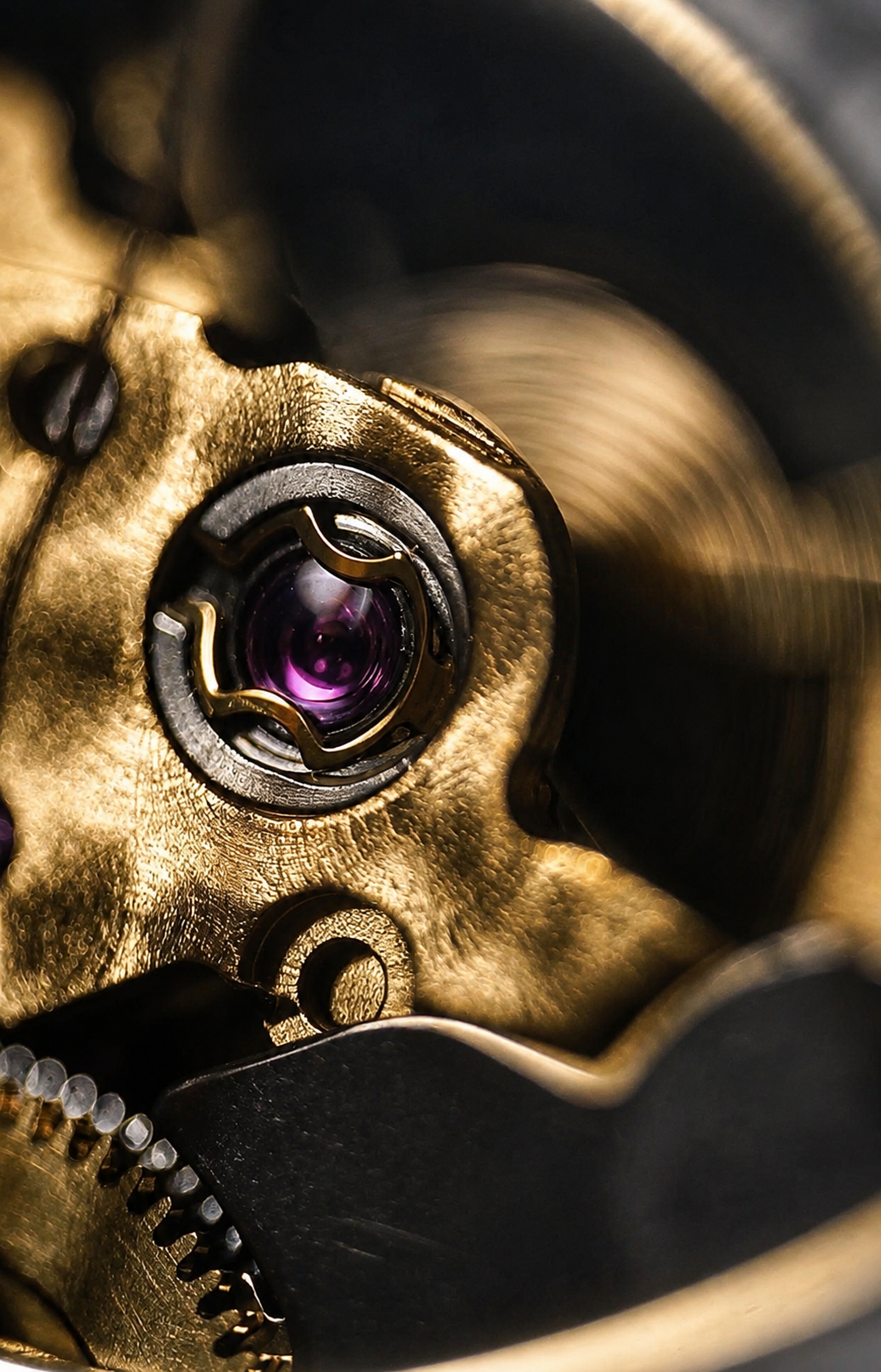
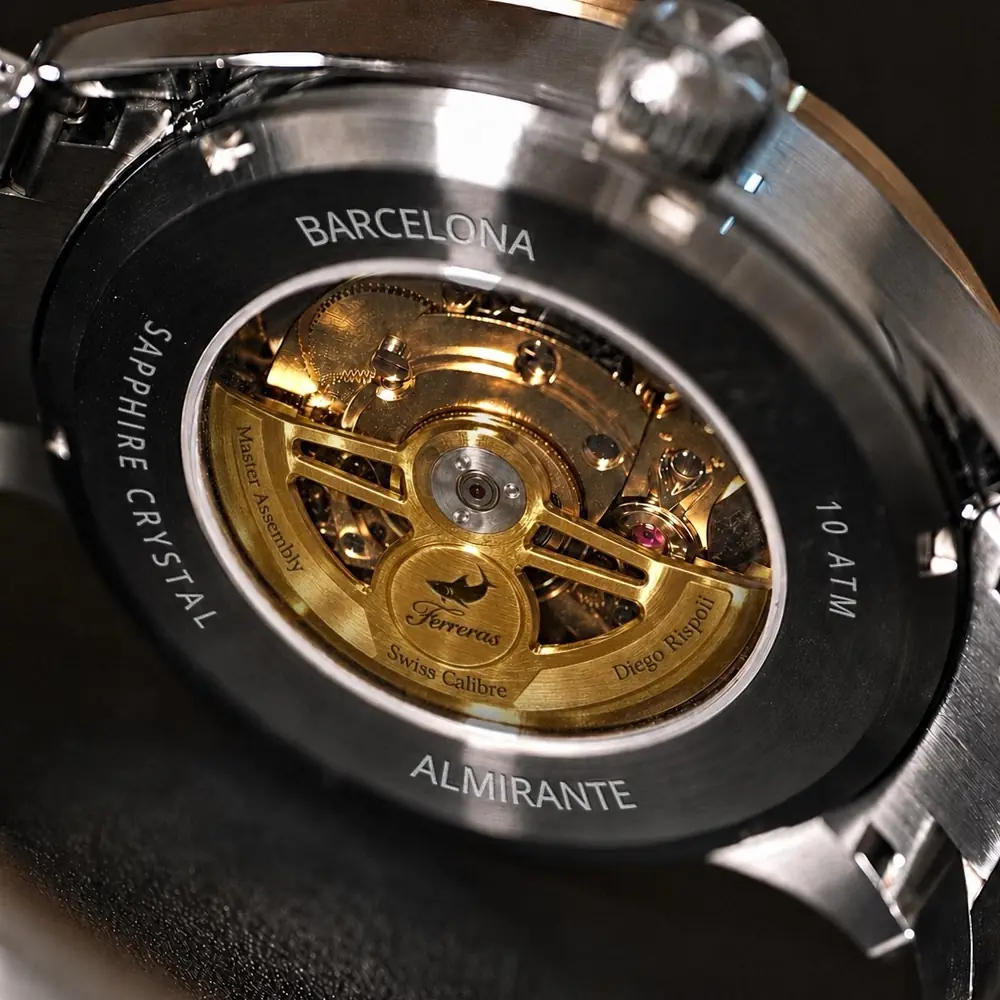
When sapphire also closes the back of the case, the watch gains a second life. The sapphire caseback reveals the calibre in motion: the oscillating weight turning with every gesture, the bridges, the jewels. For those who appreciate mechanics, it is an invitation to look. For those discovering it, a way of understanding that there is something alive inside.
316L stainless steel: the material for those who live by the sea
What 316L means
Stainless steel is a broad family. 316L belongs to the austenitic steels, alloyed with chromium, nickel and molybdenum. The "L" stands for low carbon content, around 0.03% at most, which improves its behaviour against corrosion. Molybdenum, for its part, strengthens resistance to chlorides, that is, to sea water and perspiration. Cedinox, the Spanish centre for stainless steel research and development, summarises the differences between AISI 316 and 316L in a technical note (in Spanish).
It is no coincidence that it is known as marine-grade steel. It is a natural choice for a watch designed for the Mediterranean, as we explain in our article on the nautical watch.
What it brings
Beyond its resistance, 316L accepts very different finishes: mirror polish, satin, brushing. That alternation of surfaces, catching the light differently on each face of the case, is one of the signatures of fine watchmaking. And on an integrated bracelet, where case and links read as a single line, the quality of the steel shows in every articulation.
How to recognise good work in steel
Beyond the grade, it is worth looking at the finish. Clean edges, crisp transitions between polished and satin surfaces, links that move without play. Good steel, well worked, feels dense on the wrist and keeps its shape over the years.
18 kt gold: the warmth of detail
What "18 kt" means
The karat measures the purity of gold on a scale of 24. 18 kt gold contains 18 parts of fine gold for every 24, that is, 750 thousandths. The rest is made up of other metals that give it hardness and nuance. It is the classic standard of European jewellery and fine watchmaking, because it balances the warm colour of gold with the strength needed for daily wear.
Gold plating and protection
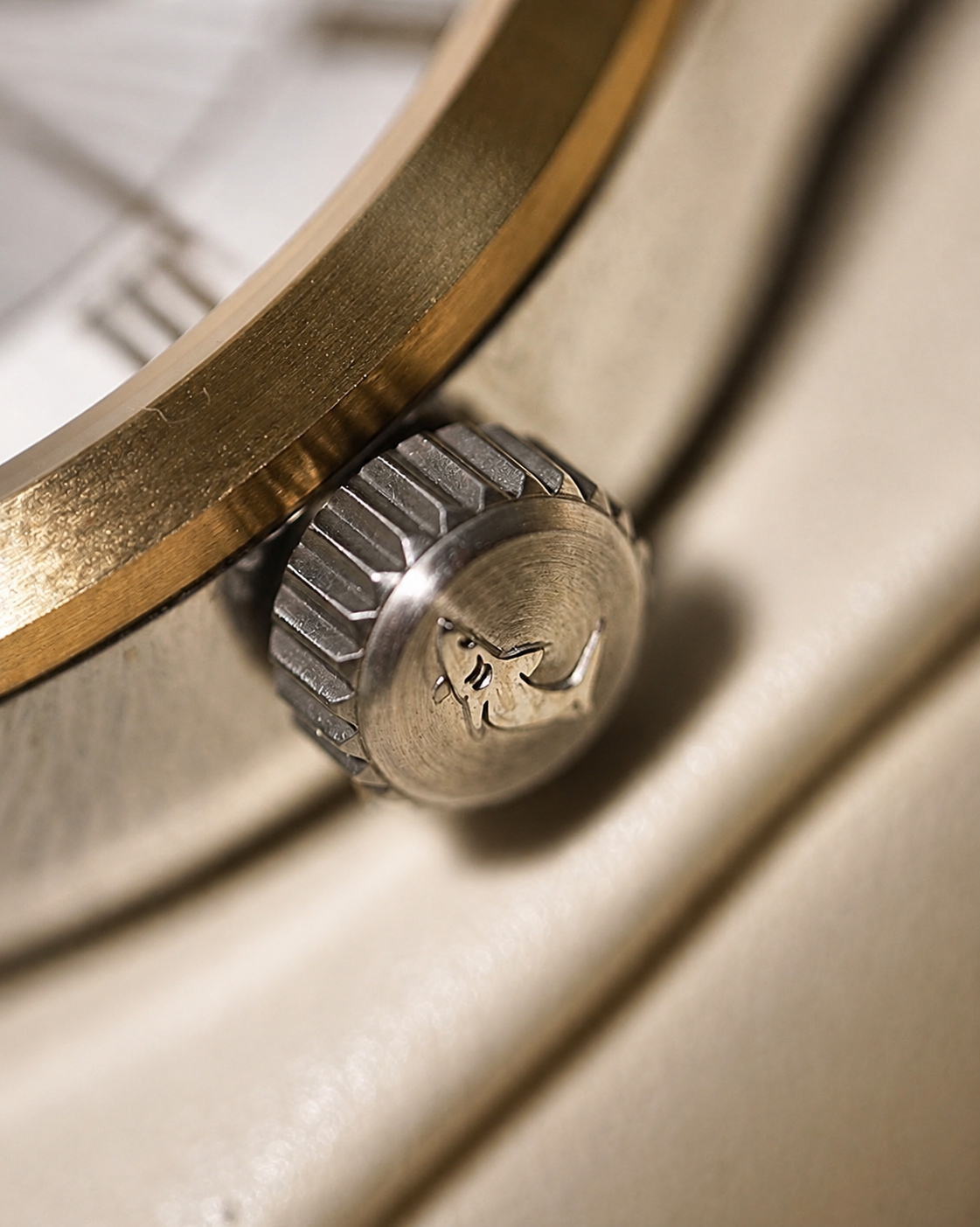
Gold can be present in a watch in two ways: as a solid part or as plating over another metal. In the latter case, quality depends on the standard of the gold used and on how that layer is protected from wear. A nano-ceramic protection adds a thin, resistant barrier over the plating, so that its shine endures with use.
On a steel piece, a well-measured touch of gold transforms the whole. The point is not for everything to shine, but for it to shine just enough.
The materials of the Ferreras Almirante
In the Ferreras Almirante, each material fulfils a precise function.
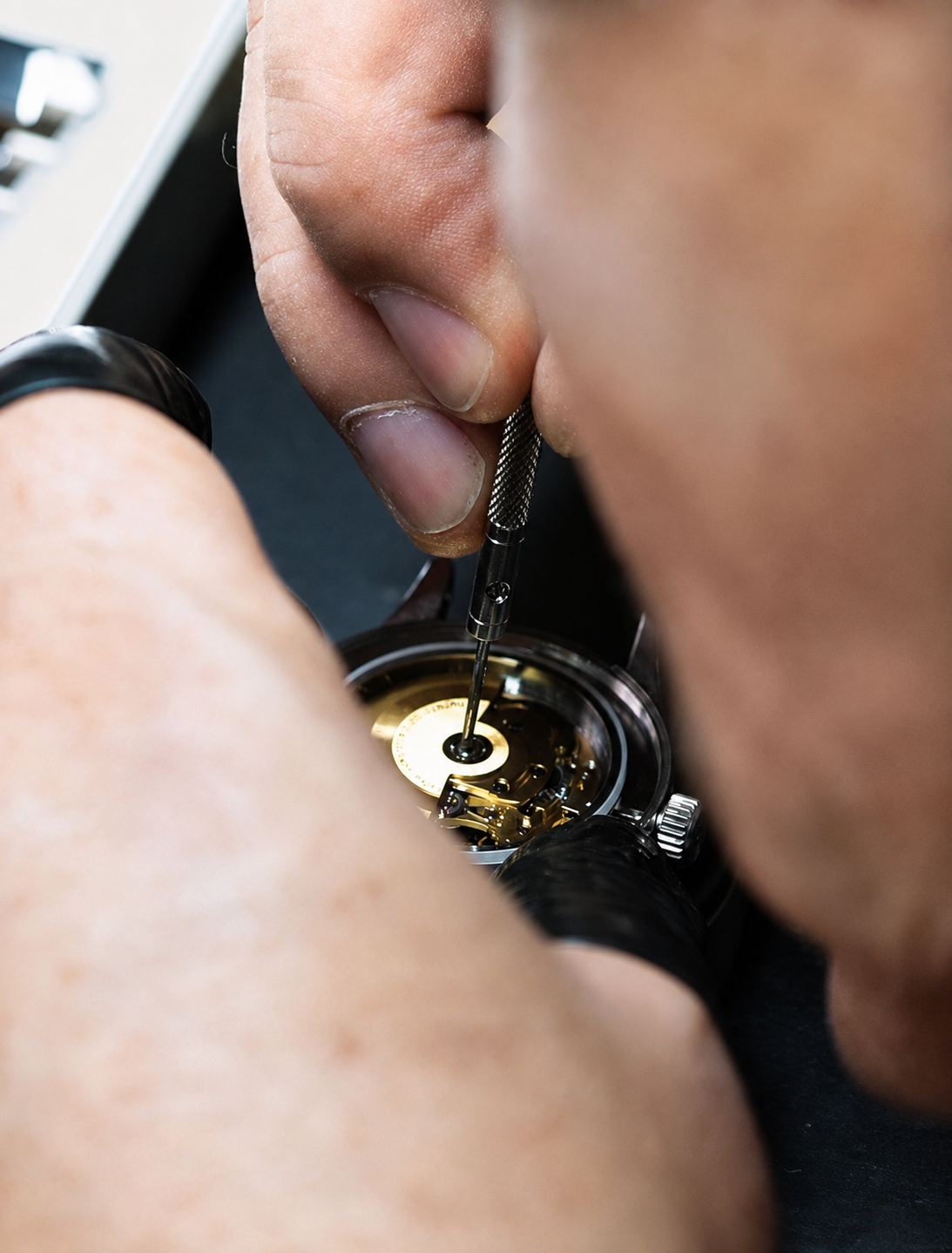
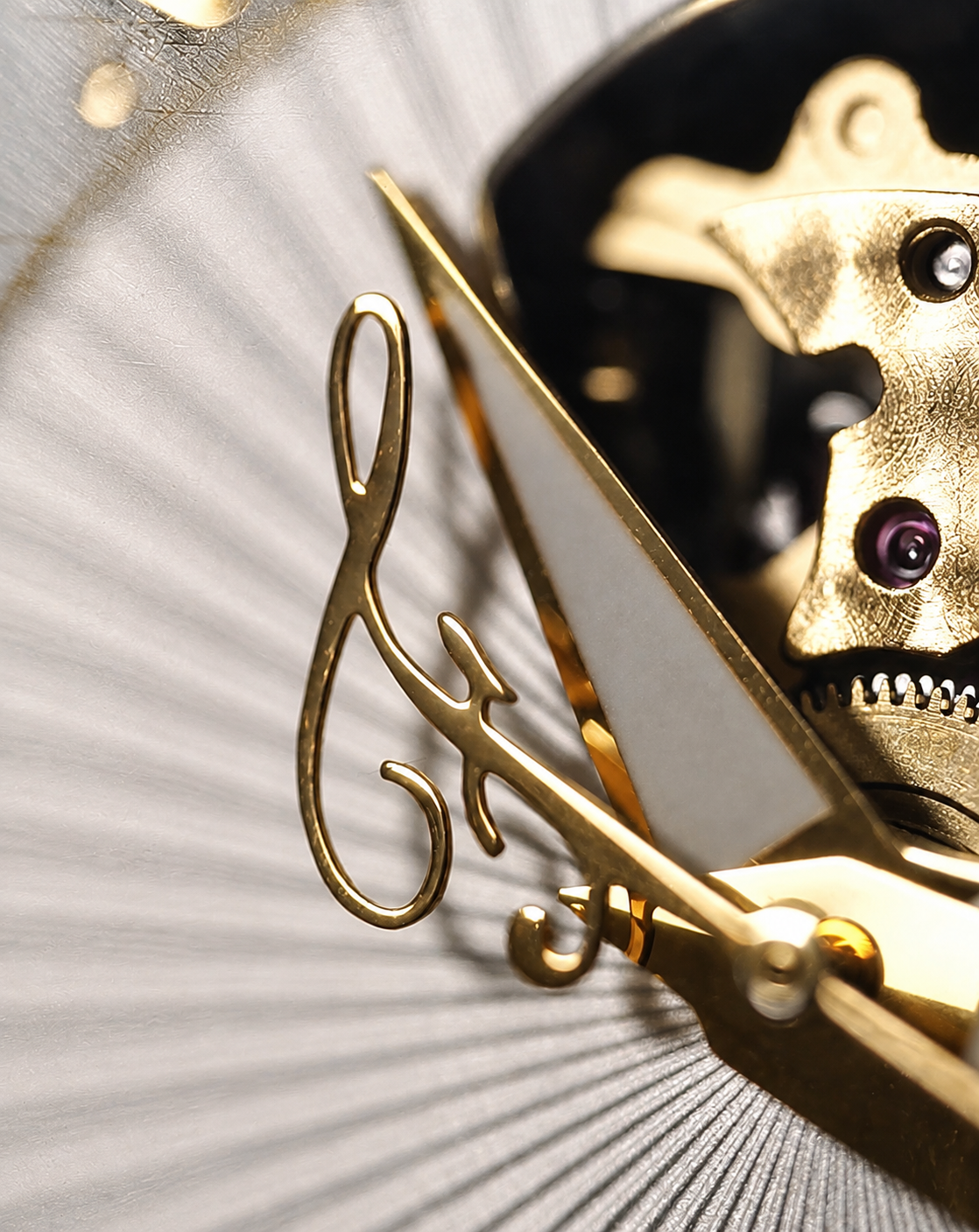
- Sapphire crystal and caseback. At the front, they protect the porcelain-effect micro-grainé dial and its 12 mm open heart. At the back, they reveal the Swiss automatic semi-skeleton calibre with a gold-tone finish and 26 jewels, regulated by hand, one by one, by a master watchmaker in Barcelona.
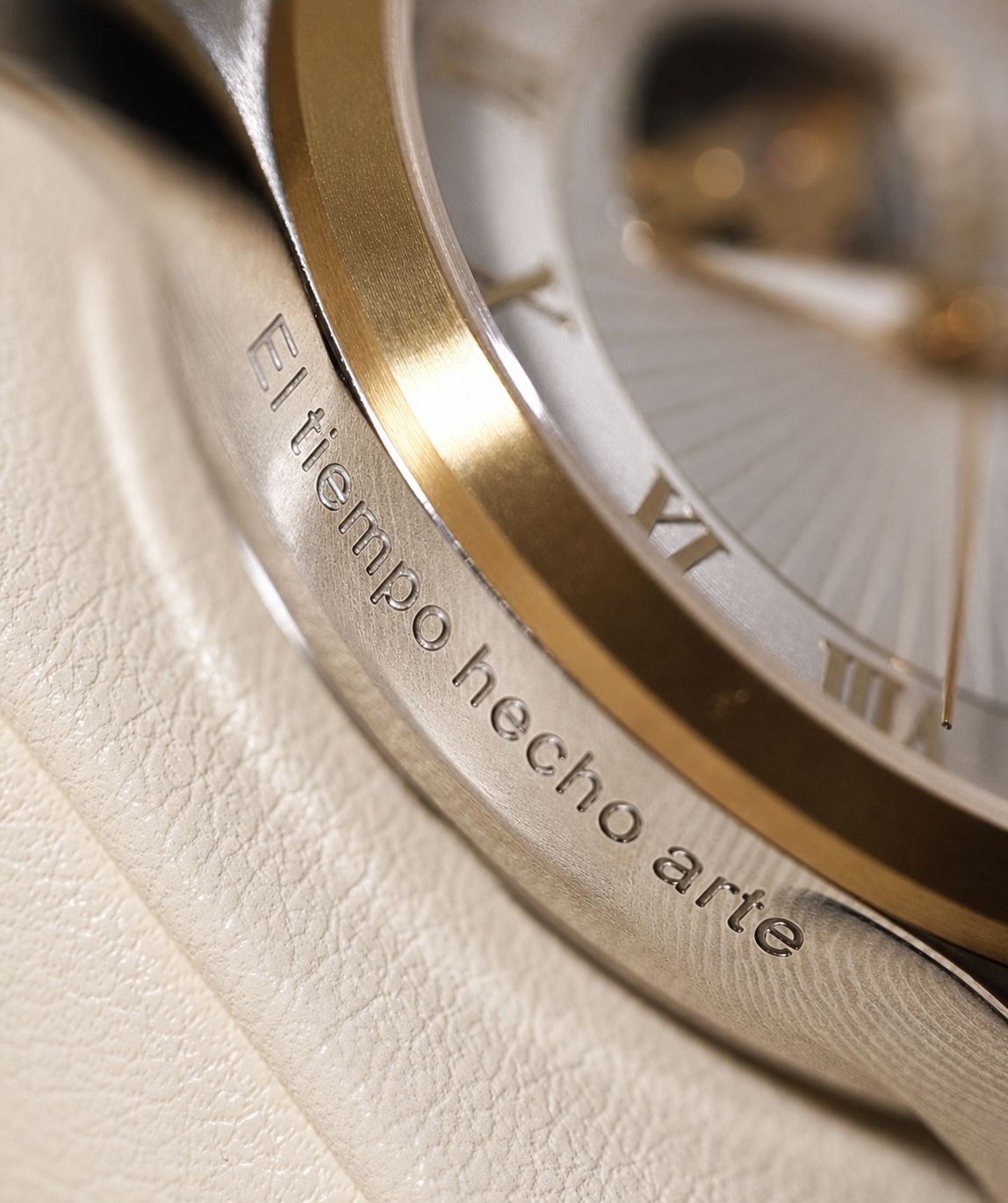
- 316L steel. The 40 mm case and the integrated bracelet are made of the same steel, with 10 ATM water resistance designed for the city and for the sea.
- 18 kt gold. The bezel features 18 kt gold plating with nano-ceramic protection, and bears on its inside the engraved number of each of the 100 pieces in the edition.
The result is a watch designed and assembled in Barcelona, with a Swiss heart and a Mediterranean soul. Swiss Heart, Spanish Soul. If you would like to know more about the open heart of its dial, we tell the story in Open-heart watch: what a semi-skeleton is and why it moves us. And if you wish to discover the story behind every decision, you will find it on the brand page.
See it, touch it, judge for yourself
Materials are best appreciated with the watch in hand: the weight of the steel, the clarity of the sapphire, the reflection of gold in natural light. If you would like to see the Almirante up close, we will arrange a private presentation, in person anywhere in Catalonia or by video call if you are abroad.
Frequently asked questions
Can a sapphire crystal be scratched?
It is very difficult. Sapphire reaches 9 on the Mohs scale and only a harder material, such as diamond, can scratch it. What is best avoided are very hard, sharp impacts.
How do I know whether my watch has a sapphire crystal?
The most reliable way is the manufacturer's technical specifications. To the eye, sapphire stays flawless over the years, without the fine marks that often appear on mineral or acrylic crystals.
What is the difference between 316 and 316L steel?
316L has a lower carbon content, which improves its resistance to corrosion. That is why it is so valued in watchmaking, especially for watches worn by the sea.
What does it mean for a watch to have 18 kt gold details?
That the gold used has a purity of 750 thousandths: 18 parts of fine gold for every 24. It is the classic standard of European jewellery and fine watchmaking.