Watchmaking authority
How to choose an automatic watch: what truly matters
, 6 min read
Knowing how to choose an automatic watch does not require being a collector. It requires looking in the right order: first the heart, then the case and, finally, the character. An automatic is a small machine that lives on its own movement and, well chosen, will accompany you for decades. This guide gathers the essentials to decide with discernment.
What an automatic watch is and why it still fascinates
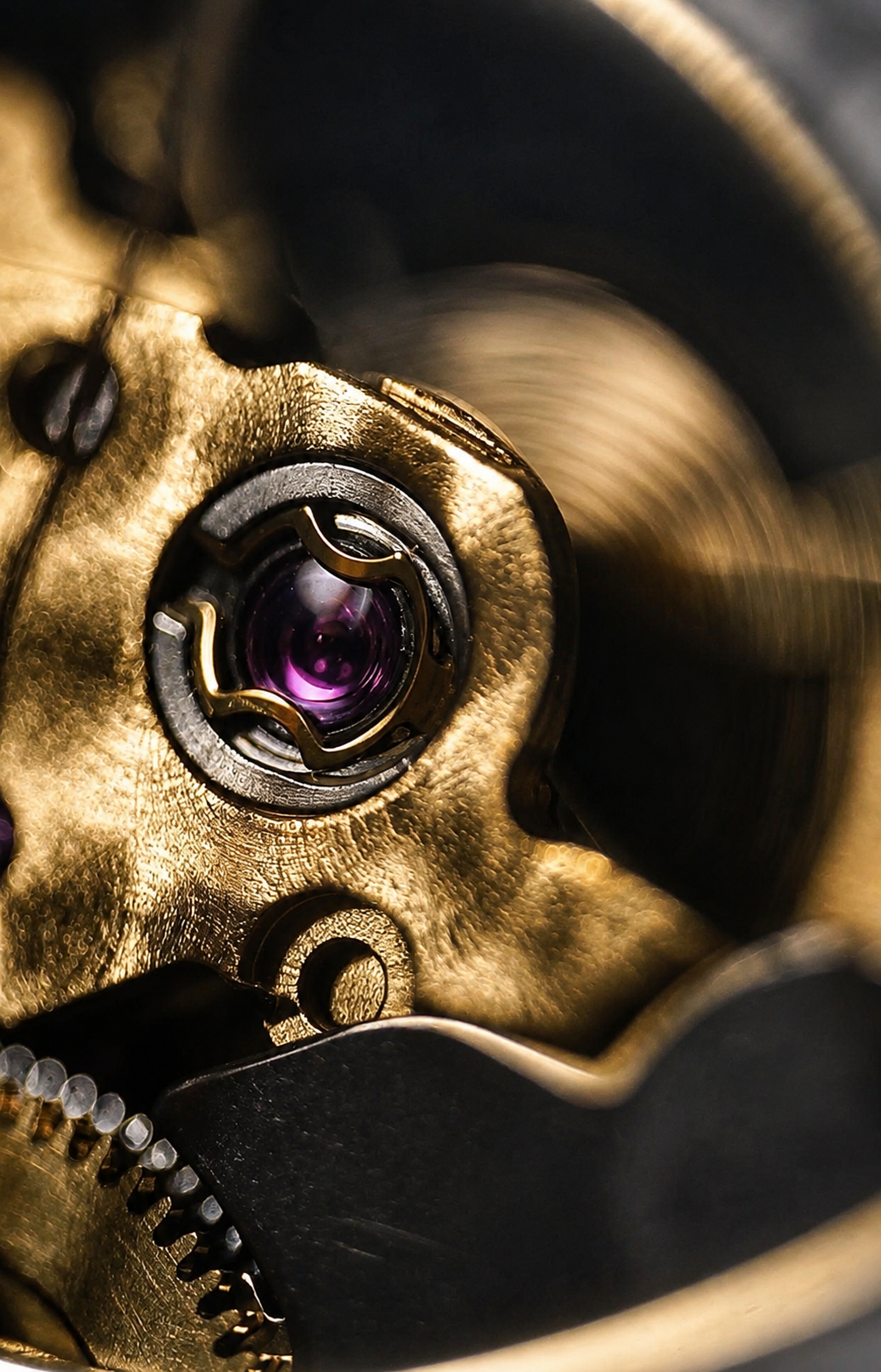
An automatic watch is a mechanical watch that winds itself. Inside, an oscillating mass, the rotor, turns with every movement of the wrist and tensions the mainspring housed in the barrel. That spring releases its energy little by little, and the balance wheel and escapement turn it into regular steps of the hands.
There is no battery and no circuit. Only gears, synthetic rubies that reduce friction, and precise adjustment. That is why an automatic offers something no other watch can: it is alive while you wear it.
If it sits still in a drawer, it will stop once the power reserve runs out. A few turns of the crown by hand, or simply putting it on, is enough for it to beat again.
The calibre: the heart worth looking at first
The calibre is the movement, the engine of the watch. It is the first thing worth knowing, because reliability, servicing and a good part of the piece’s value depend on it.
Frequency and jewels
Frequency indicates how many alternations the balance wheel makes per hour. A calibre at 28,800 alternations per hour, that is, 4 Hz, advances eight tiny steps per second. That cadence gives the seconds hand its fluid, almost continuous sweep.
Jewels are synthetic rubies placed at the points of greatest friction. Their number alone does not measure quality: what matters is that they sit where the movement needs them.
Power reserve
The power reserve is the time the watch keeps running without being moved once fully wound. If you wear it daily, the rotor maintains it. If you rotate between several watches, it is worth knowing how many hours it lasts before asking to be wound.
Reliability and servicing
A good Swiss calibre of proven production has an advantage that is often overlooked: any qualified watchmaker knows it and has spare parts. The Sellita SW200, made by the Swiss house Sellita, is an example of a robust automatic movement widely used in Swiss watchmaking.
But the standard calibre is only the starting point. What makes the difference is what is done with it afterwards: the finishing, the decoration and, above all, the adjustment.
Hand adjustment: where a calibre becomes a watch
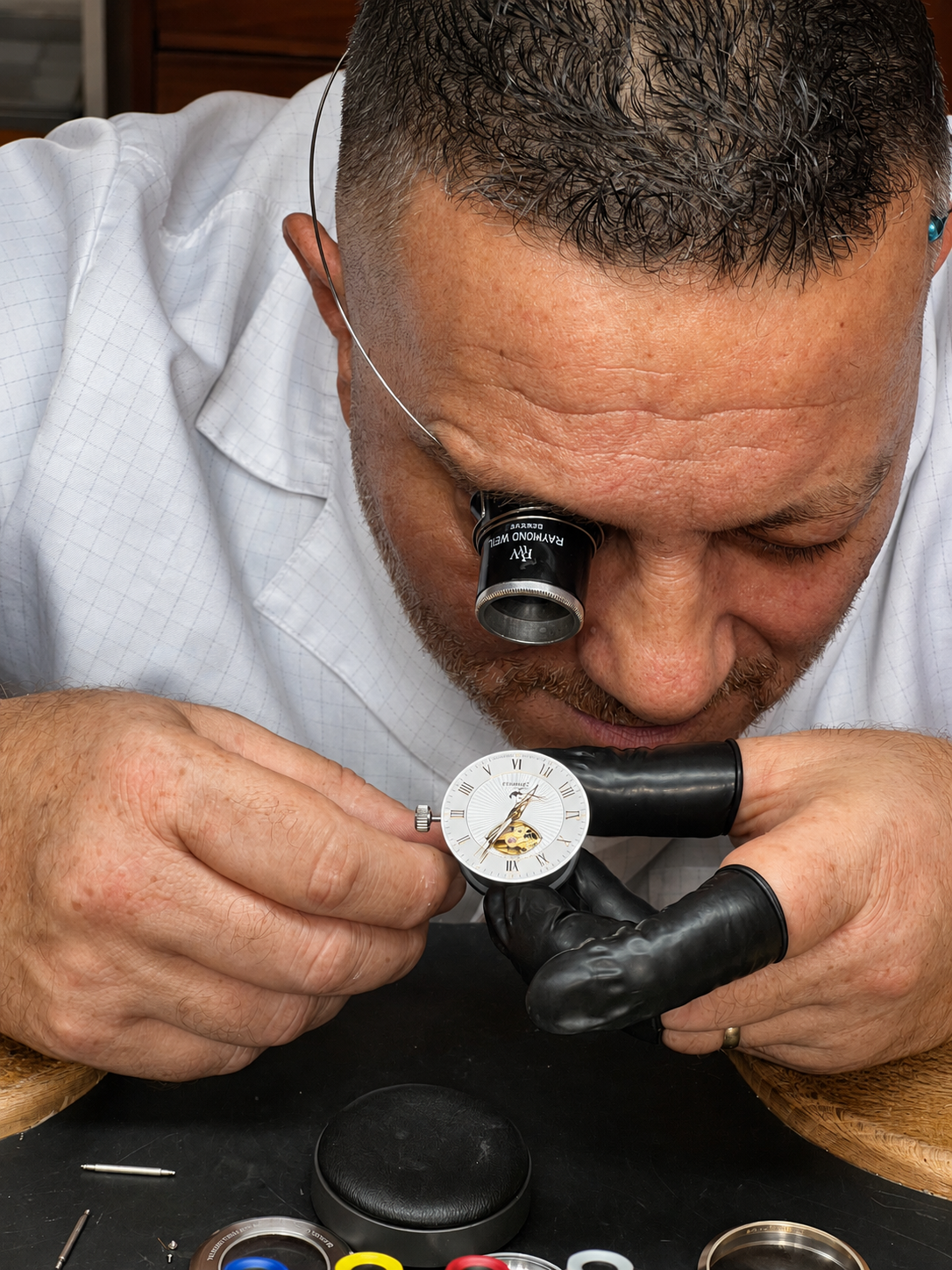
Two watches with the same calibre can behave very differently. The difference lies in regulation: the work of a watchmaker who observes the piece’s rate in several positions and corrects it with patience.
At Ferreras, every calibre is adjusted by hand, one by one, in Barcelona, by a master watchmaker. It is a slow gesture, invisible on a technical sheet, that shows in everyday precision. It is one of the pillars of our way of understanding watchmaking.
The case and materials: what you feel on the wrist
316L steel
316L stainless steel is the standard of quality watchmaking thanks to its resistance to corrosion and its good behaviour in contact with skin. It allows mirror polishing and satin finishes that play with the light.
Sapphire crystal
Synthetic sapphire crystal reaches 9 on the Mohs scale, on which diamond marks 10. In practice, it resists the scratches of daily wear. When the caseback is also sapphire, it lets you watch the movement at work.
Water resistance
Water resistance is expressed in atmospheres (ATM) or metres. A 10 ATM watch is ready for bathing and swimming. If your life unfolds near the sea, it is a detail worth checking before you decide.
Size and proportion: how to choose the right diameter
The diameter of the case influences how a watch is perceived more than any other detail. A 40 mm case is a versatile size: it has presence without being excessive and suits most wrists, with a shirt or in summer.
Also pay attention to the lug-to-lug distance and the bracelet. An integrated bracelet extends the lines of the case and gives the whole a continuity you appreciate when wearing it.
The ideal is to try it on. Photographs guide, but proportion is judged on the wrist.
The details that distinguish an author’s piece
When the calibre and the case are up to standard, what separates a good watch from a memorable piece are the details you only discover up close:
- The dial. A porcelain-effect micro-grainé finish, for example, offers a soft, deep texture that changes with the light.
- The open heart. An opening in the dial that reveals the balance wheel in motion and reminds you, with every glance, that the watch is alive.
- The crown and the bezel. A signed crown or an 18 kt gold-plated bezel are signs of a house that cares for every piece.
- The edition. A number of its own, engraved on the watch, makes the purchase something more personal: a piece that will never be repeated.
How to choose an automatic watch with discernment: a practical summary
Before deciding, go over these questions:
- Which calibre does it carry, and who can service it in the future?
- Has it been adjusted by hand or merely assembled?
- Are the case and crystal materials built to last?
- Does the water resistance fit the way you live?
- Do the diameter and the bracelet sit well on your wrist?
- Does it have details of its own that give it character and a story to tell?
If all the answers convince you, you have found a watch for many years.
The Almirante: an automatic conceived from the heart
The Ferreras Almirante is born from these very questions. It beats with a Swiss automatic Sellita SW200 semi-skeleton calibre with a gold finish, 26 jewels and an approximate power reserve of 38 hours, adjusted by hand one by one in Barcelona.
Its 40 mm 316L steel case continues into an integrated bracelet. The bezel is 18 kt gold-plated with nanoceramic protection. The porcelain-effect micro-grainé dial opens onto a 12 mm heart, the F of Ferreras signs the minute hand and the shark, the crown. Sapphire crystal and caseback, and 10 ATM water resistance.
It is a limited edition of 100 numbered pieces, each with its number engraved. Swiss Heart, Spanish Soul.
If you wish to see the Almirante in person before deciding, we will arrange a private presentation, in Catalonia or by video call if you are elsewhere.