The watch market
Spanish watchmaking: a tradition that once again bears its own name
, 7 min read
When people talk about fine watchmaking, the conversation usually travels straight to the Swiss Jura. Yet Spanish watchmaking has a history of its own, made of court workshops, marine chronometers and public clocks that still set the rhythm of city life today. It is a discreet tradition, often forgotten, which in recent years has begun to carry names of its own again.
In this article we look at some episodes of that history, explain the traits that have defined the watch in Spain and describe how we understand an author-led Spanish watchmaking today, from Barcelona.
A tradition older than it seems
For centuries, the clock and the watch were court objects in Spain. Monarchs collected table clocks, wall clocks and pocket watches, and brought watchmakers from all over Europe into their service. In the eighteenth century, that interest became a state project.
In 1771, Charles III approved the creation in Madrid of the Royal School of Watchmaking, directed by the brothers Felipe Santiago and Pedro Charost, French watchmakers who had already been working in Spain for several years. The aim was to train watchmakers in the country and reduce the dependence on imported pieces. The school did not achieve the results expected and probably closed in the mid-1790s (Complutense University of Madrid). But it left behind an idea that reappears again and again in the country's watchmaking history: the will to have a voice of its own in a craft dominated by others.
José Rodríguez Losada: a watchmaker from León in London
If one name sums up nineteenth-century Spanish watchmaking, it is that of José Rodríguez Losada. He was born in 1797 in Iruela, in today's province of León, and settled in London as a young man, where he started at the very bottom in a watchmaker's workshop. Over the years he came to run the business, signing his pieces with his name and an address on Regent Street.
From London, Losada always kept his ties with Spain. He supplied chronometers to the Spanish Navy, received the title of watchmaker to the Royal Household and, in 1857, installed in the Plaza del Arenal in Jerez de la Frontera what is considered the country's first public street clock.
The Puerta del Sol clock
His best-known work is the clock of the Real Casa de Correos, in Madrid's Puerta del Sol. Losada built it and donated it to the city, and it was inaugurated on 19 November 1866 (Community of Madrid). This November marks 160 years. Every New Year's Eve its chimes set the ritual of the twelve grapes, so that, at least one night a year, an entire country looks at the dial of a Spanish clock at the same time.
Losada's story says a great deal about Spanish watchmaking: a talent able to compete with the best, a close relationship with the sea and navigation, and a work that ends up becoming part of people's everyday lives.
What has defined Spanish watchmaking
There is no Spanish school in the sense in which people speak of a Swiss or an English school. During the twentieth century, large-scale watch production was concentrated in a few centres, and Spain was above all a country of collectors, repairing watchmakers and jewellers with a long tradition. Even so, some traits recur when one looks at its history.
The sea as a horizon
A country of ports and navigators needed to measure time precisely to find its way at sea. For a long time marine chronometers were instruments of first necessity, and that relationship between the watch and the sea remains very present in the Spanish sensibility. We explore it in our article on the nautical watch.
The clock as a shared object
Great tower and façade clocks, such as the one in the Puerta del Sol, have made time something public, tied to squares, festivities and collective rituals. In Spain, time is lived as much on the wrist as in the street.
Jewellery and detail
The Spanish jewellery tradition has always cared for finish, proportion and the way a piece is presented. That taste for visible detail is one of the legacies that fits best with author watchmaking.
Spanish watchmaking today: the return of the author's signature
In recent years a new generation of small, independent brands has emerged in Spain. They share an idea: there is no need to reproduce other people's codes to make a good watch. Many combine a Swiss calibre of proven reliability with their own design, short series and a direct relationship with the person who wears the piece.
It is, in a way, Losada's spirit brought up to date: learning from the finest watchmaking centres in the world and contributing a voice of one's own. If this approach interests you, we develop it in our article on author watches in Barcelona.
Swiss Heart, Spanish Soul: Spanish watchmaking according to Ferreras
Ferreras was born in Barcelona with a clear ambition: to create author watches with a Swiss heart and a Mediterranean soul. We have been on the market for two years, with a vocation to endure, and our pieces are present in very select jewellers in Spain. This year we exhibited at the Barcelona International Boat Show, as the youngest brand at the show.
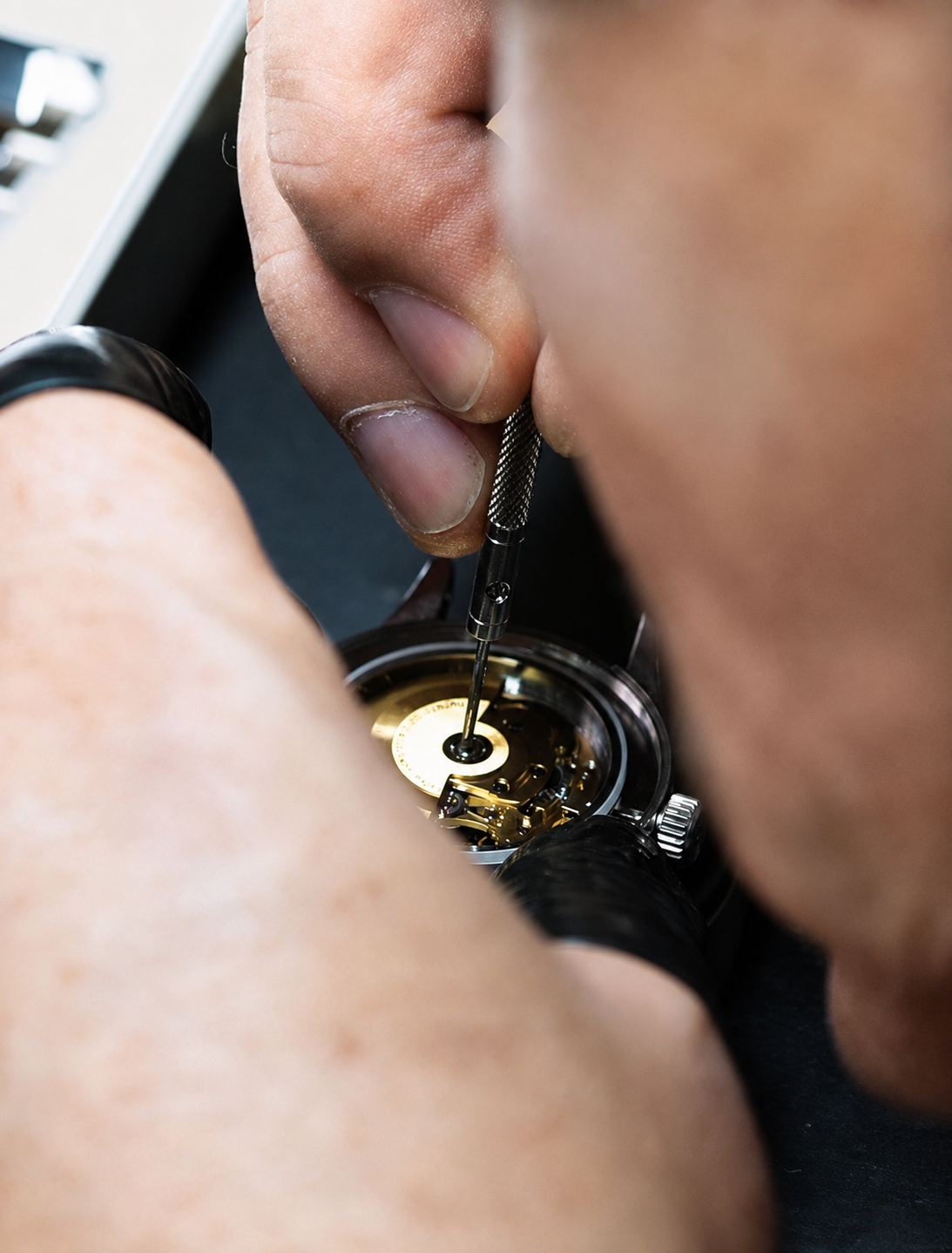
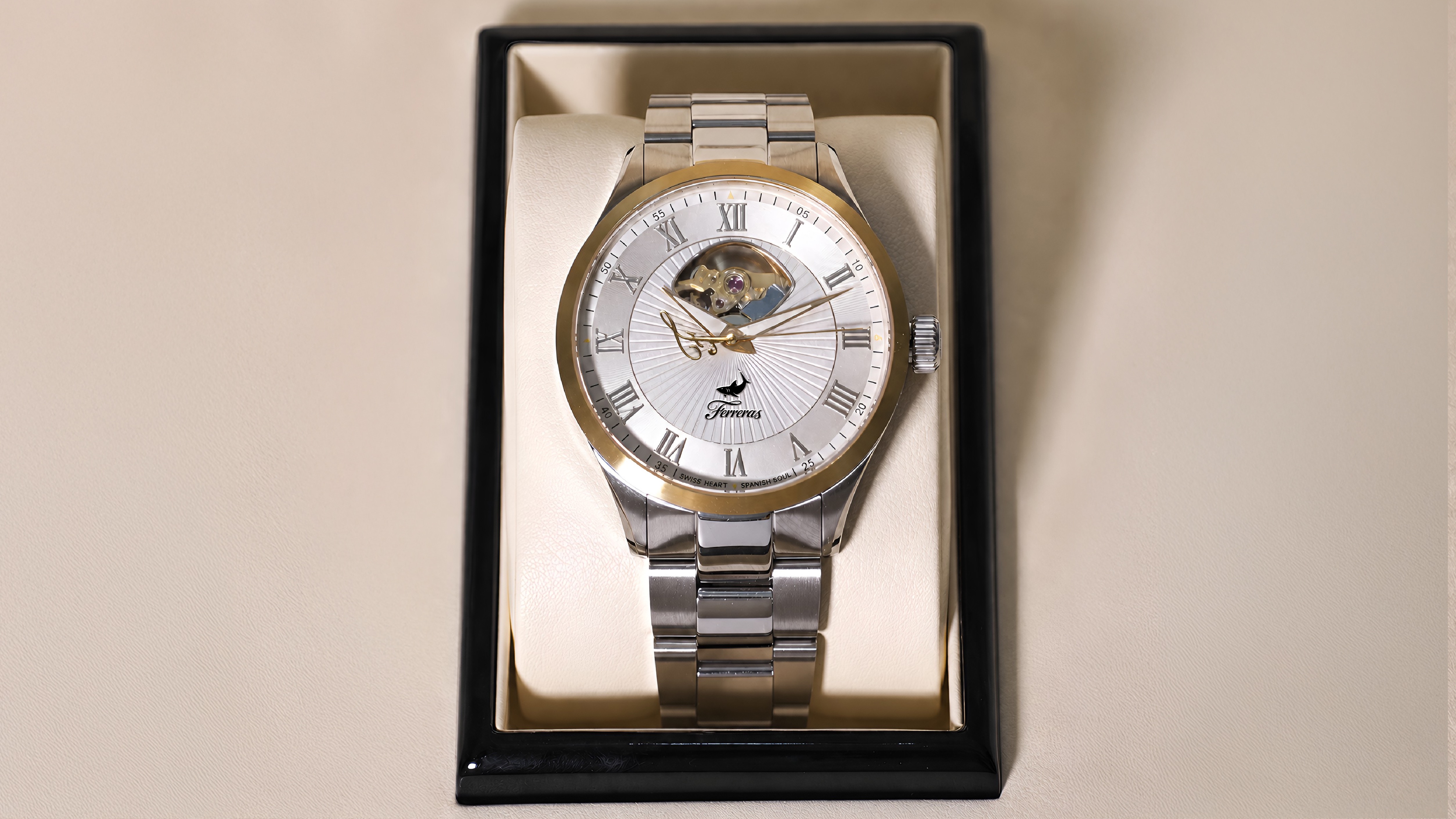
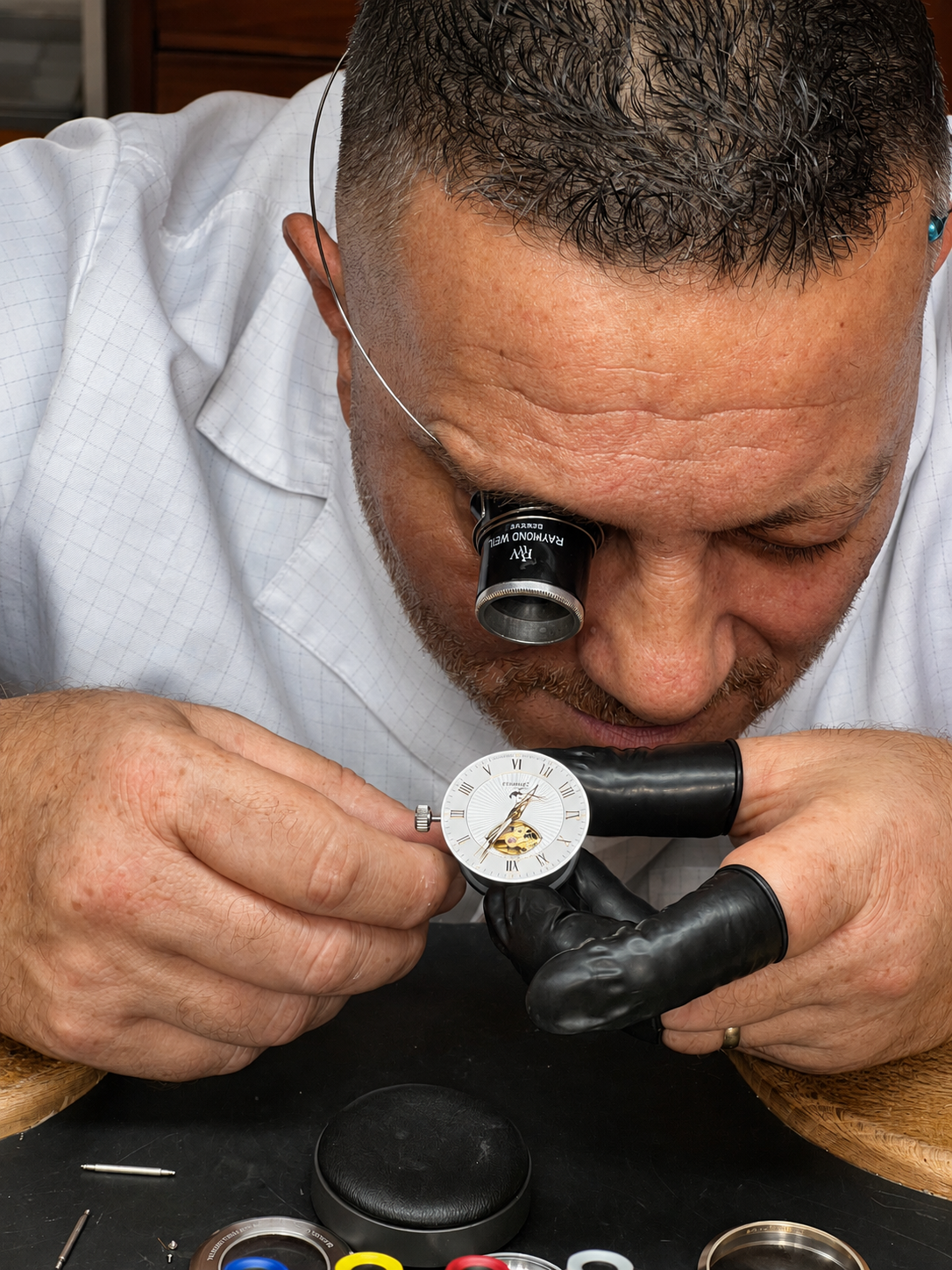
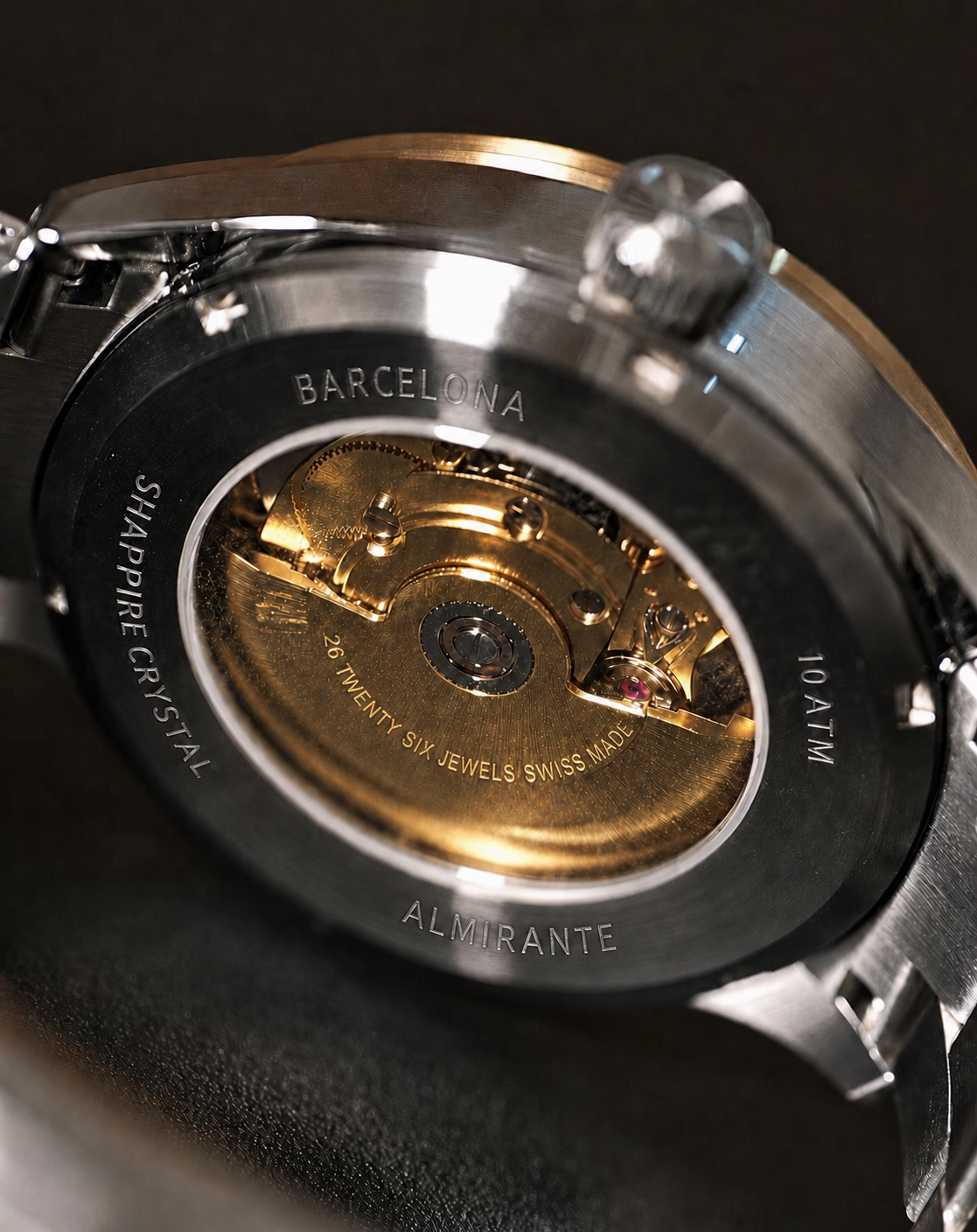
The Ferreras Almirante sums up this way of understanding Spanish watchmaking. Its heart is a Swiss automatic semi-skeleton calibre with a gold-tone finish, 26 jewels and an approximate power reserve of 38 hours, regulated by hand, one by one, by a master watchmaker in Barcelona. In A watch made by hand in Barcelona we describe that work, gesture by gesture.
Its soul is Mediterranean: a 40 mm 316L steel case, a porcelain-effect micro-grainé dial, a 12 mm open heart, the Ferreras F on the minute track and the crown signed with the shark, the emblem of the brand. The bezel, with 18 kt gold plating and nano-ceramic protection, bears on its inside the number of each of the 100 pieces in the edition.
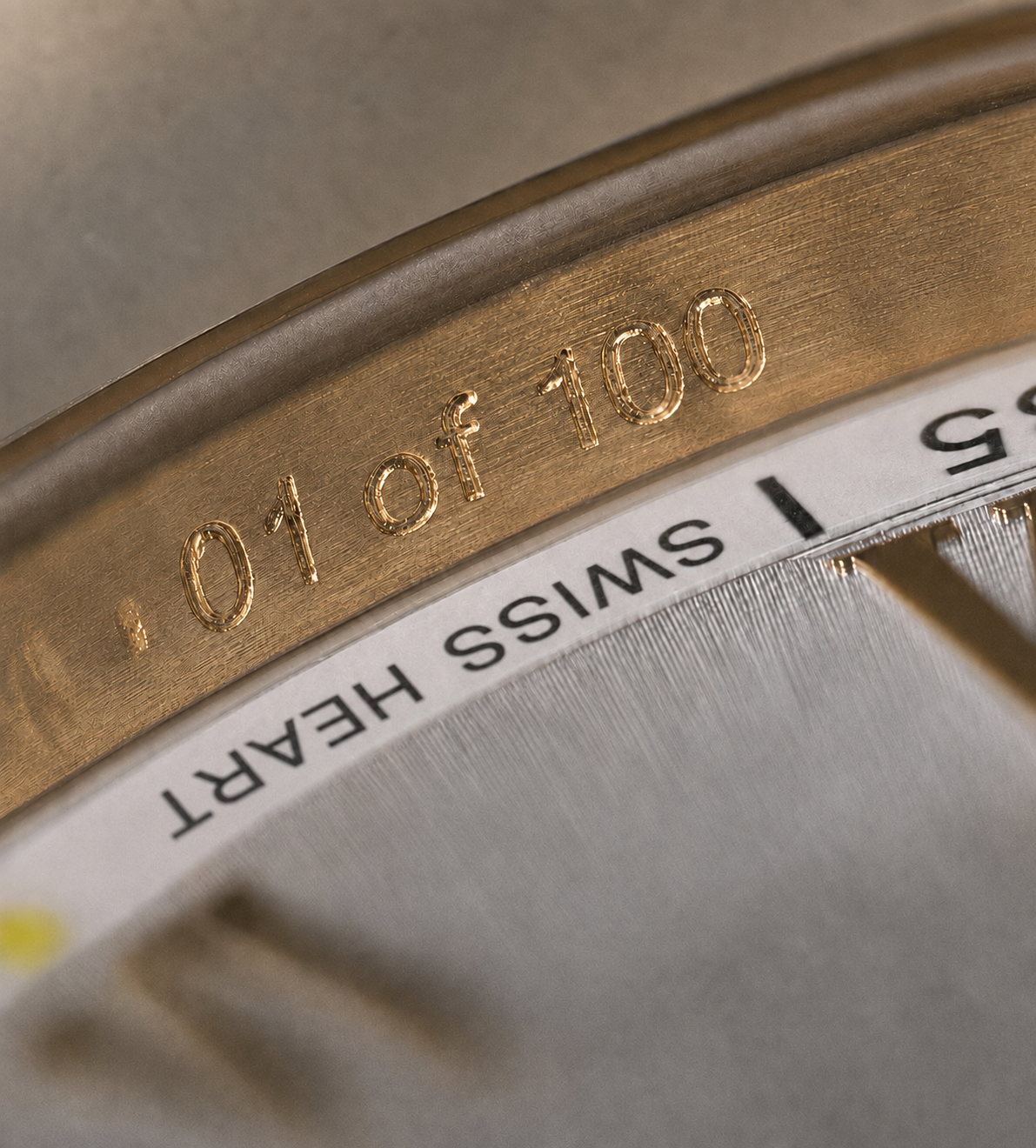
The Ferreras Excellentia shares the same idea: it is also a limited edition of 100 numbered pieces, of which only the last remain. And for those who wish for a unique piece, Ferreras Atelier develops watches conceived for a single owner and private editions for companies, yacht owners and private circles.
You can learn more about our story and our way of understanding time on the brand page.
See a Spanish author watch in person
The best way to appreciate a watch is to hold it in your hand. If you would like to see the Almirante up close, we will arrange a private presentation, in person anywhere in Catalonia or by video call if you are abroad.
Frequently asked questions
Is there a Spanish watchmaking tradition?
Yes. From the Royal School of Watchmaking promoted by Charles III in 1771 to watchmakers such as José Rodríguez Losada in the nineteenth century, Spain has had a watchmaking history of its own, closely linked to the court, the sea and public clocks.
Who built the Puerta del Sol clock?
José Rodríguez Losada, a watchmaker from León established in London. He donated it to Madrid and it was inaugurated on 19 November 1866.
Are there Spanish luxury watches today?
Yes. A new generation of independent brands designs author watches in Spain, often with Swiss calibres of proven reliability, short series and a design of their own.
Where are Ferreras watches designed and assembled?
In Barcelona. The Almirante incorporates a Swiss automatic calibre that a master watchmaker regulates by hand, one by one, in the city.